

| Books |
| Backlist |
| Scheduled Appearances |
| Bio |
| Newsletter |
| My Causes |
| Contact Patricia Wynn |
| Home |
 ON RETIRING?
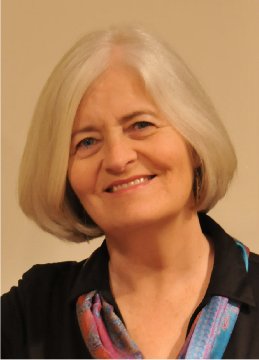 -- A Newsletter --It never occurred to me that I would ever choose to retire as an author. Most authors never retire, like old soldiers, That is not my main reason for retiring, though. There are hundreds, if not thousands of pages of unpublished manuscripts saved on my hard disk. They range from just concepts to big completed novels that need fixing; but I will not be working on them in the foreseeable future or perhaps ever. Life events affect us all in different ways. I always marvel at the authors who manage to publish year after year, and I wonder if nothing has occurred to interrupt their output, or if they simply don't let life intrude. When one of my children got sick and stayed sick for three years, I gave up writing; and when I went back to it a few years later, I could not go back to producing books to please my publisher. Having faced the fragility of life, I decided to write just what I wanted to write, which at that moment was the Blue Satan mystery series. At the age of seventy, it is natural to assess how many years one has left and to prioritize the things Each one of these projects is about legacy. Authors are lucky in that they leave a trace of themselves behind in their books, but there are other ways of leaving a legacy, and except for a few exceptional authors, there are deeds we can accomplish that will produce a greater legacy than our books. As someone who has always loved history and family, I am the logical member of my own family to sort, organize, and publish the closetful of letters and articles I've been saving since moving my parents out of their home of 45 plus years. My mother was a well-known journalist for the Houston Post for almost 40 years. Before that, in the final year of World War II she was Washington correspondent for the Birmingham News and another Birmingham daily, as well as for a London newspaper. She was a prolific, award-winning writer who somehow managed to raise four children, often produce more than one article per day, travel, give speeches, and still enjoy life. As an only child of adoring parents, she also wrote them every day. My grandmother saved her letters, which make up a good number of the boxes in my closet. The Houston Post, once the paper with the biggest circulation in Texas, went the way of many newspapers in the 1980's, its archives along with it. If I do not do something with my mother's letters and work, her legacy will vanish faster than my novels, and I'll be damned if I'll let that happen. Somewhat in conjunction with this, I want to pursue my genealogy, not to trace my ancestry back to William the Conqueror or the royal family (that ain't a gonna happen), but to try to put stories to the people who made it possible for me to live today. I may find that they were debtors, transported to the New World, slave owners, adulterers, or thieves, but whatever else they were, I know they worked very hard to make a life as a pioneer when there were no handouts and life was very hard. If I can honor their endeavors by passing on what I can learn about them to my descendants, I'll be very happy. Last, but not least, is a responsibility that unexpectedly fell into my lap and led me to a project on which I've been working for the past three years. My parents bought a farm as a weekend place some 60 years ago. After their deaths, and my youngest sister's, my dear brother took on the maintenance of the place. When he died suddenly, I was the only person with the time and the devotion to the farm to try to fill his shoes. Then, during the first two years of the pandemic, after sprucing up the houses and tidying the big tool shed, my interest turned to the land. On a tour with friends, I saw a pollinator garden and, never having been a gardener, I decided that I could, at least, do that. We all know about the dire state of honeybees, and the lack of milkweed to feed Monarch butterflies. So, says I, I can make a garden for them.
I learned that a couple of good friends had become Master Naturalists, and with their help, I began taking online classes about bees, native plants, groundwater conservation, soil, restoring riparian areas, wildlife management, no-dig gardening, and native grassland restoration. There were more, but this gives you the idea. By the time I learned about prairie restoration and the fact that it's a big, growing movement from Minnesota to Texas, I knew that converting our tired, over-grazed acres back to prairie grasses and forbs (wildflowers) was the greatest legacy I could leave not only to my family, but to the wildlife that used to nest and feed on our property, and to our distressed Earth. These plants, once established, will bank carbon more deeply than trees. Although I still tend my pollinator garden, it's mainly for exercise. Our land, once restored with the help of the Wildlife Habitat Federation and grants from Texas Parks and Wildlife will contain a hugely diverse number of plants, plenty for native bees and honeybees, and milkweed every year for the migrating Monarchs. It will attract the Bob-White quail, wild turkeys and other birds that could not survive in fields used to cultivate exotic grasses from Africa and other foreign parts. AND, the greatest legacy of all, I now have a grandchild. My contemporaries have been enjoying their grandchildren for up to twenty years, but at last my husband and I have a darling granddaughter! I want to be able to drop everything at a moment's notice to be with her. Truly, if a grandchild had come earlier, my attention would have been a bit torn between family and career, so her timing was perfect — just like her. To tidy loose ends, I will eventually send all my Blue Satan mysteries to my e-book publisher, Belgrave House. Perhaps more of my old Regencies will be put into audiobook by Regency Reads, but that will be up to them. If I really cannot stand not writing, I will dust off some of my unpublished books and put them out into the ether, but it will be for the pleasure of creating fiction, not for my career. It will be such a relief not to think about marketing. And I'll have so much time to read! Already, I listen to at least one audiobook per week while I'm driving to our farm or gardening, and I read another at bedtime. There are some great authors writing today and many, many to choose from. I suspect my readers know that as wonderful as it is to spend time in a bookstore, only a fraction of books make it to bookstore shelves, and except for bestsellers, those that do are only on the shelves a few weeks before being replaced by newer releases. To find the best ones, sometimes you have to search for recommendations from online reader sites. Then, by all means, order those books from a bookstore. To my readers, I will always be happy to hear from you. Let me know what books you are enjoying, and if you are writers, what you are writing. And when you get old, don't just fade away. Do something important.
My continuing Public Service Announcement: The CDC has finally counted the number of diagnosed cases of Lyme disease in the U.S. and reported 400,000 new cases annually. This does not include the thousands of undiagnosed and misdiagnosed cases. This is a lot of people. Please find out how to protect your family from Lyme disease. You can read about Lyme Disease at LymeDiseaseAssociation.org. Please check out my favorite causes, in case you want to join me. There's a link on the left of this page. |
Last updated: 19 October 2023
Comments and suggestions
URL: http://www.patriciawynn.com/bio.htm